
Solar Eclipse
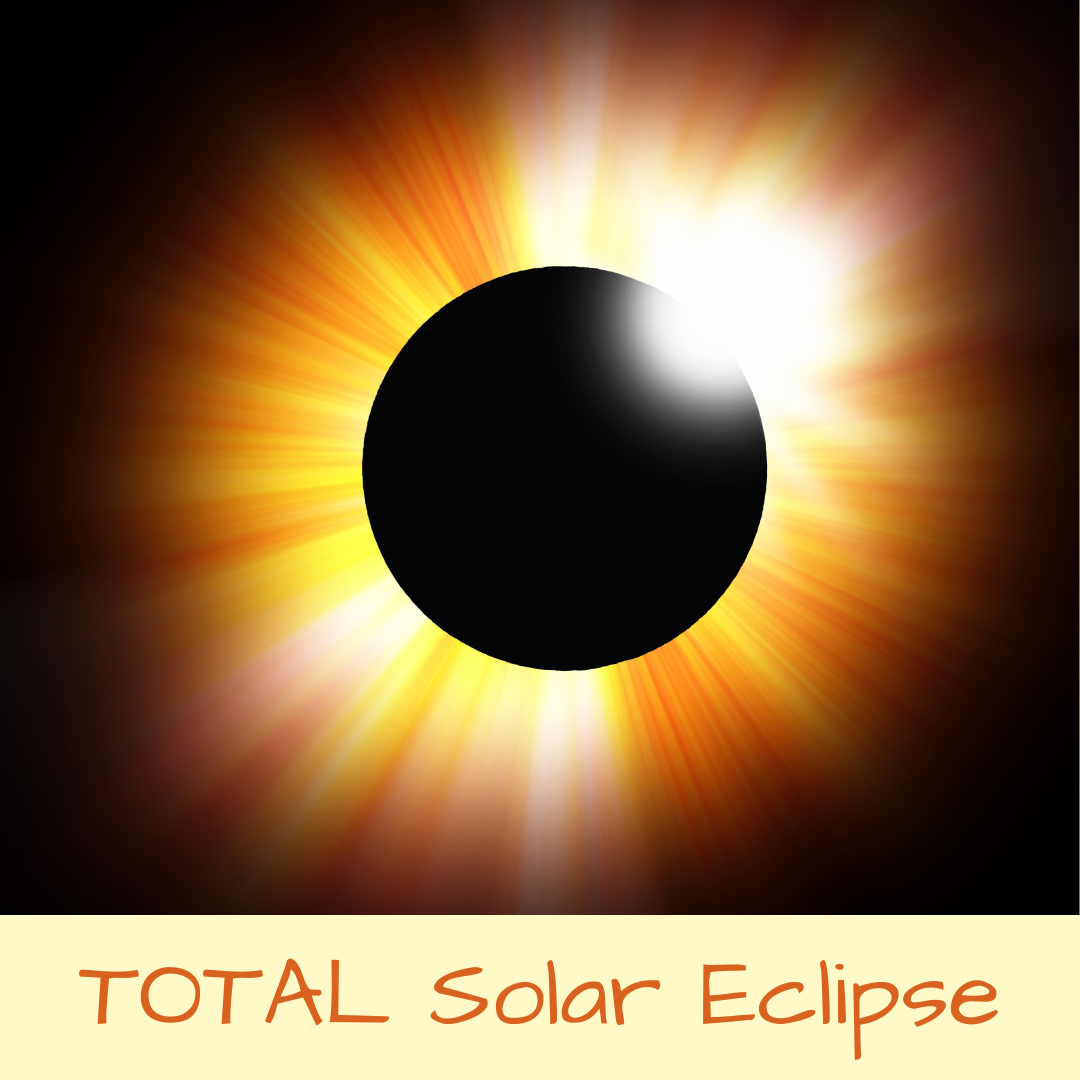
What is a solar eclipse. A solar eclipse happens when the moon comes between the Earth and the Sun and blocks the Sun’s light for a few minutes.
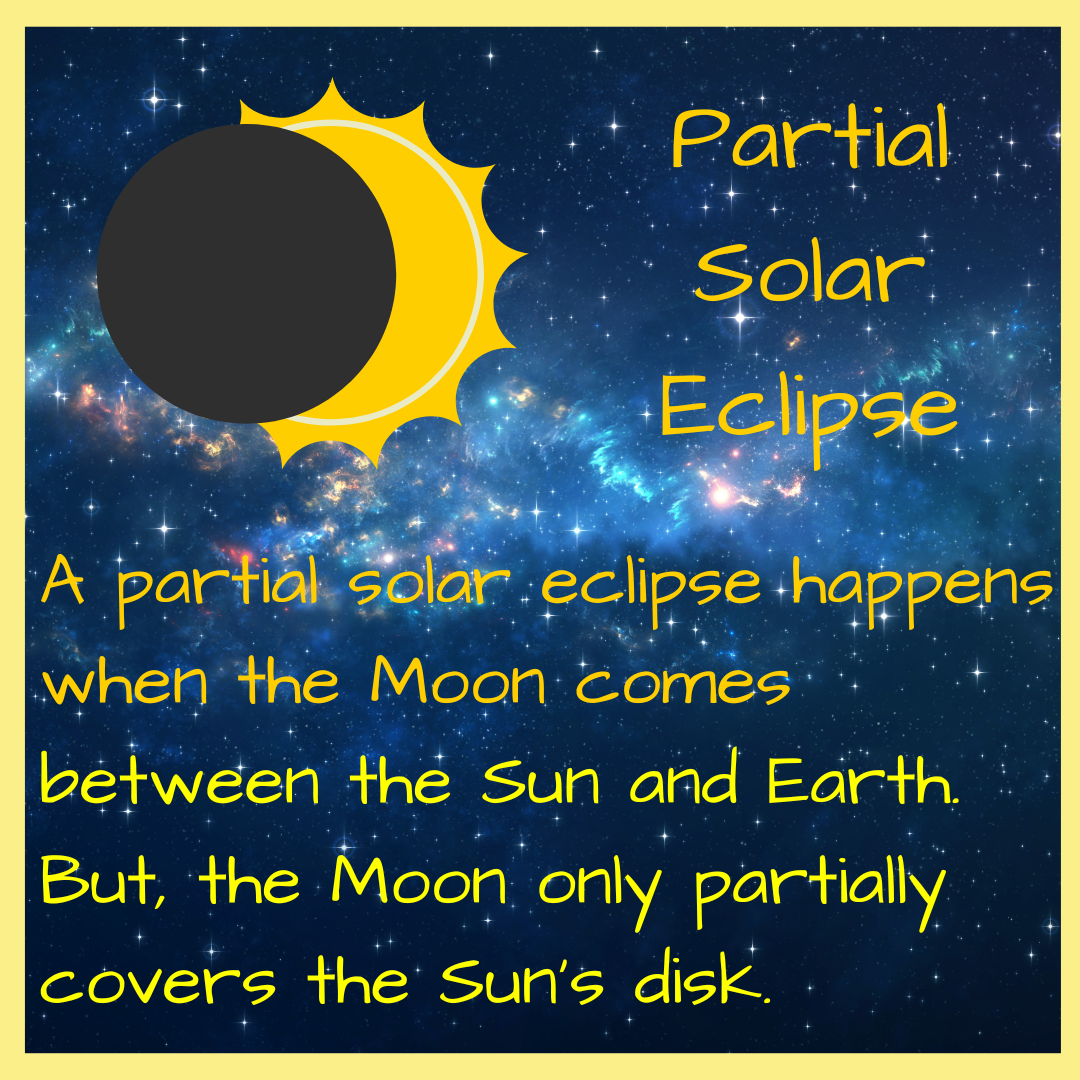
There are two main types of solar eclipses: partial and total. During a partial solar eclipse, only a portion of the sun is obscured. While a total solar eclipse occurs when the sun is entirely covered by the moon.
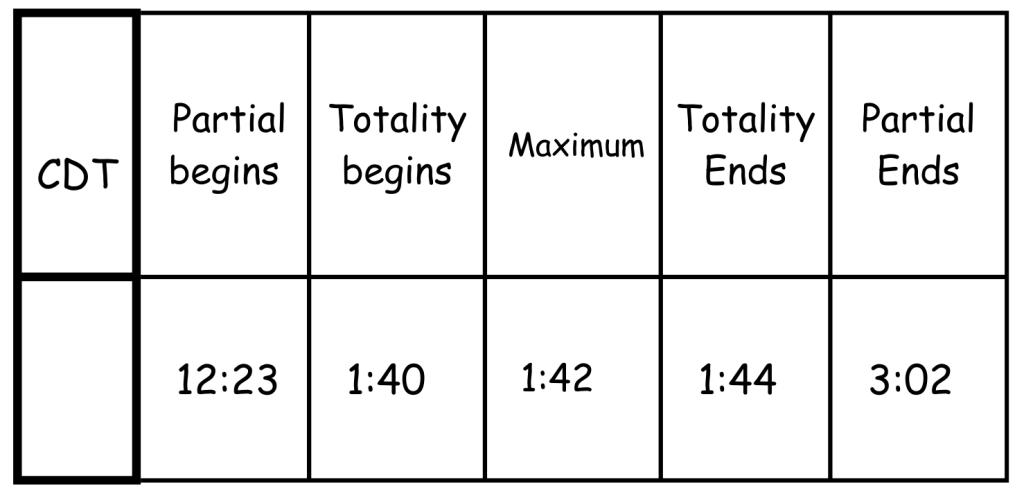
This is an ideal event for the kids to experience. We have a solar coming up quickly in exactly two weeks. The 2024 Solar Eclipse is happening on Monday, April 8 beginning at 12:23 pm Central time.
The Viewing Path of the 2024 Solar Eclipse
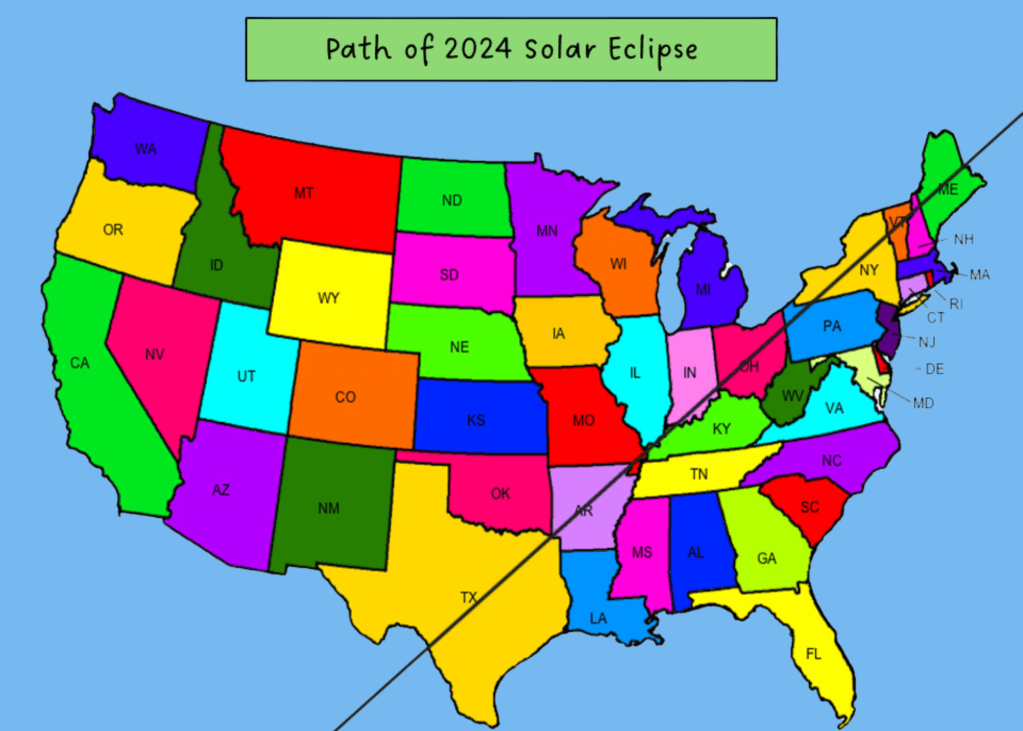
The viewing path of the Solar Eclipse will determine whether you can see a partial eclipse or a total eclipse. The path of the Sun will go across Mexico and then across the lower parts of the United States and north towards the state of Maine. Look at the map of the path to see if your location will get to see a Total Solar Eclipse.
A Total Solar Eclipse will last just under 3 hours. The moon begins to move across the Sun on one side, a bit at a time until it covers it completely. Even though the Moon is completely blocking the view of the sun, the corona can still be seen on the edges of the moon. This causes the moon to cast a shadow on the Earth and it becomes dark for us in the path of the Solar Eclipse. Next, the moon begins to make its way across the other side of the Sun and the sunshine returns to Earth.
Just Before and After Totality
The temperature of the air will drop, and the light will dim.
- Creatures may act as though it’s dusk. This can include birds going to roost and crickets chirping.
- Streetlights may come on.
- Rapidly moving, long, dark shadows will be visible on the ground and sides of buildings.
- The last specks of light, called Baily’s Beads, will be visible around the edge of the Sun. They correspond to where valleys are present on the Moon’s surface. This phenomenon is short-lived and may not last long enough to notice.
During Totality
The Moon must cover the Sun completely for you to experience the effects of totality. If the Moon covers 99.9% of the Sun, that is still only a partial eclipse.
When the Moon blocks 100% of the Sun:
- The Sun’s corona (its outer atmosphere) will be visible.
- You may see bright pink spots at the Sun’s edges. These are gigantic loops of plasma rising from the Sun’s surface, called “prominences.” Their color is thanks to glowing hydrogen gas.
- Bright stars and planets may be visible in the sky.
- The light will be dim, and you may be surrounded by a 360-degree sunset.
Totality of the Solar Eclipse
The amount of time that the totality will last is about 7 ½ minutes. The phase of the totality will begin about 12:23 pm Central Daylight Time.
Please remind students that they should never look directly at the sun without proper eye protection because it can cause eye damage. During the periods before and after totality, and during the partial eclipse, eye protection is necessary. Specialized eclipse glasses have been made to view the sun during a solar eclipse. The American Astronomical Society recommends the glasses be ISO standard. I purchased solar eclipse glasses from Amazon.
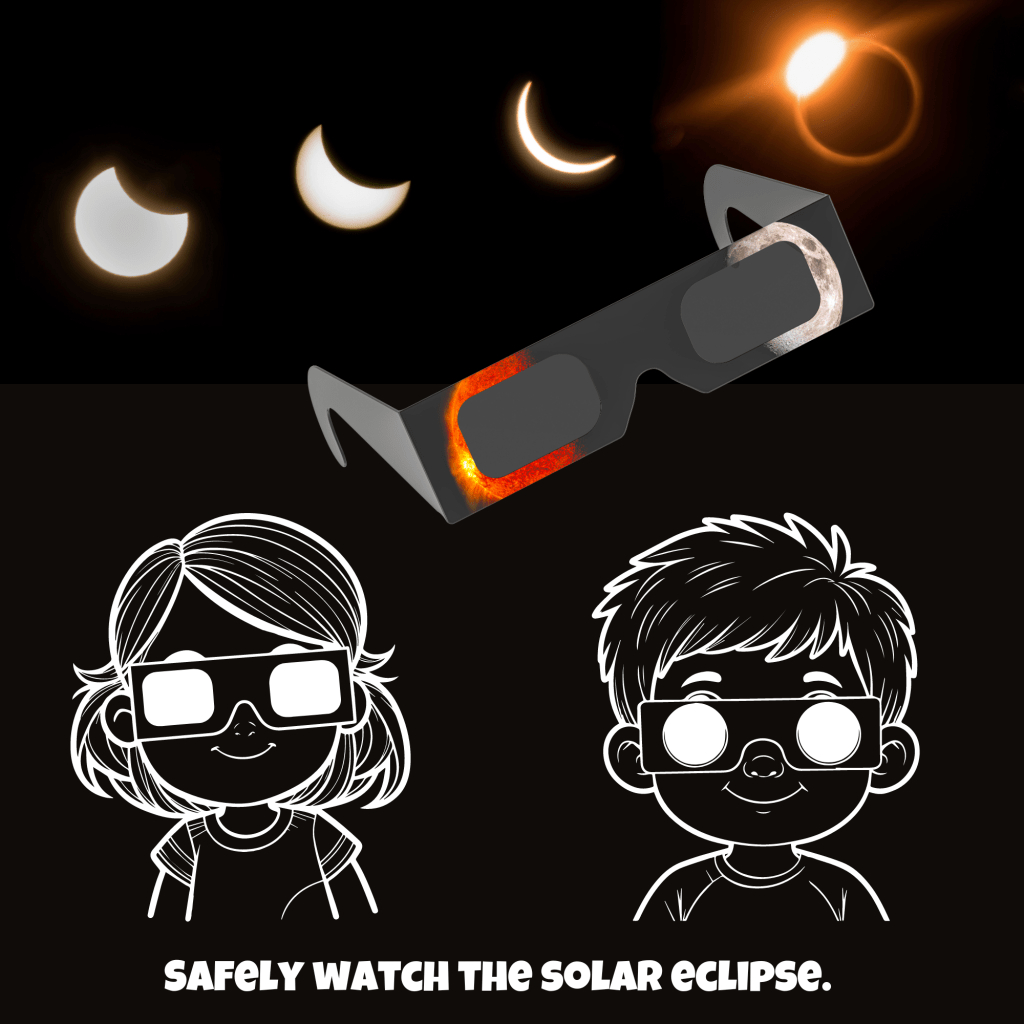
If your school is in session, I hope you will allow your students to experience this celestial event. The eclipse begins about mid-day, 12:23 Central Standard Time.
Solar Eclipse Activities.
McDonald Observatory has some information activities that your students can make and use during the solar eclipse. Here are directions for make a Pinhole Viewer to use during the eclipse.
I have made this teaching resource, Solar Eclipse Activities to engage your students learning about the solar eclipse. Spark their imagination with the hands-on reenactments using the solar eclipse paper plate models and see their excitement as they illustrate their understanding with solar diagrams!
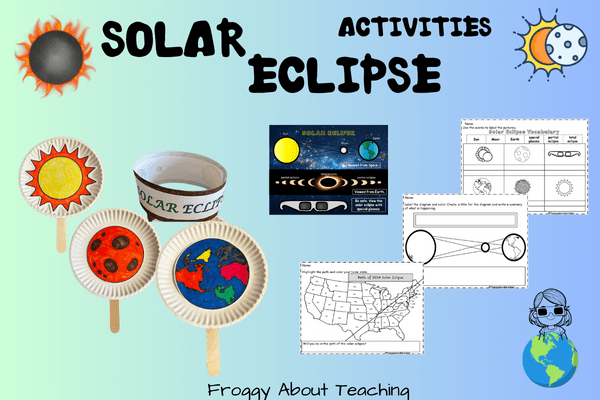
Solar Eclipse Activities on TPT
If want a resource that is a fun challenging game-learning resource. I have also made Solar Mission Escape Room. Students will be reading nonfiction texts about the sun and the solar system and escaping from solar puzzle to solar puzzle. It is a great group project for your kids to do!
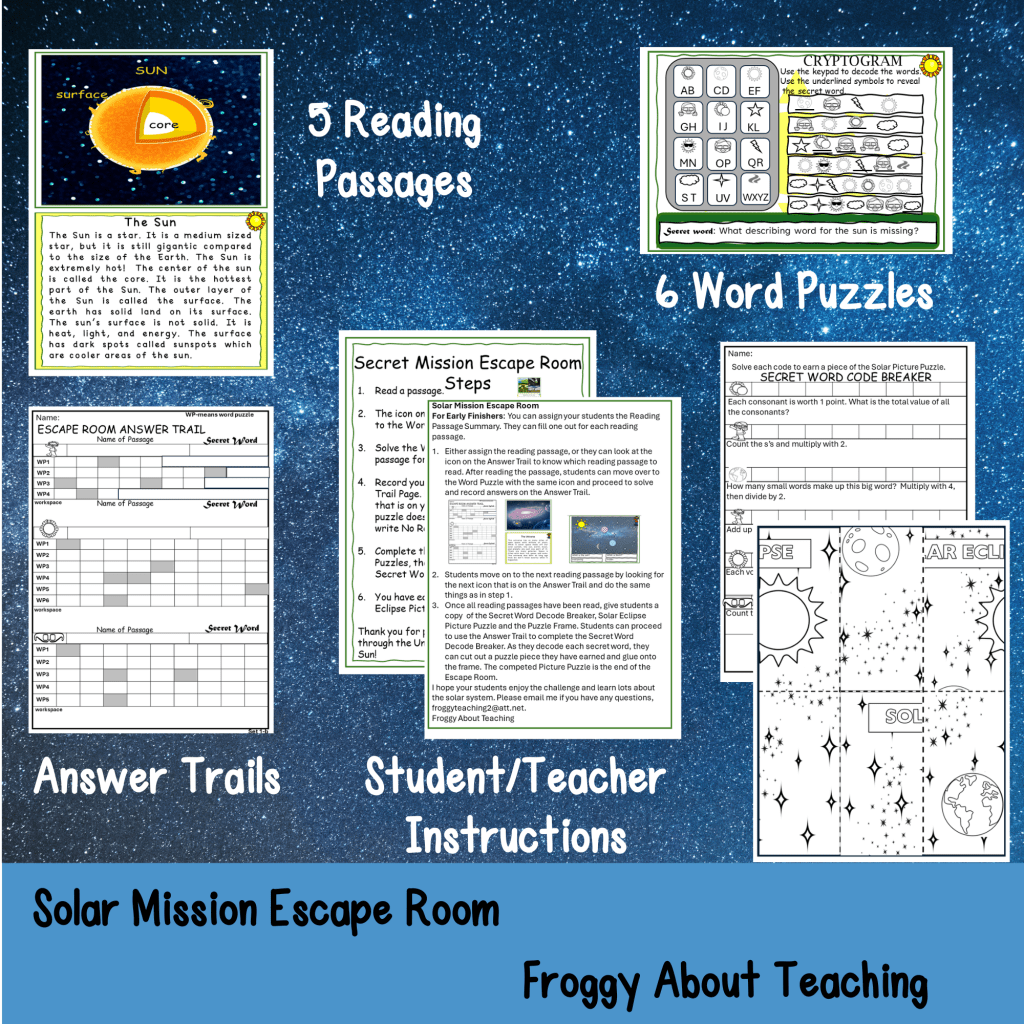
Adventure into the space journey of the the solar system. Blessings on you as you continue your journey teaching our kids!
Debbie – Froggy About Teaching on TPT
 Froggy About Teaching
Leave a comment